
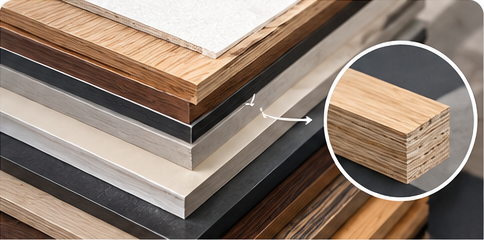
Grain and laminate direction looks like a finishing concern — something you settle at the machine. But when it's decided too late, it becomes one of the sneakiest causes of wasted board, because a part that must run a certain way can no longer drop into the offcut you were saving for it.
What "direction" actually means
On veneered ply and many laminates, the grain or pattern runs one way. For a cabinet to look right, shutters in a run should share direction, and visible panels usually follow the grain. That's a genuine quality requirement — not something to ignore.
How it quietly wastes material
When a part can be rotated freely, an optimizer (or a careful cutter) can spin it 90° to slot into a leftover strip. The moment a part is locked to one direction, that freedom is gone — so a piece that would have filled an offcut now needs a fresh sheet instead.
Plan it up front instead
- Mark grain / laminate direction on the cutlist, per part.
- Group the direction-locked parts so they share sheets efficiently.
- Let the non-directional parts (backs, hidden panels) fill the gaps around them.
Done this way, the plan respects the look you want and keeps utilization high — because the optimizer knows the constraint before it places anything, not after.
The payoff
Same finish, same grain match on the finished kitchen — but fewer sheets, because direction was a planned input instead of a last-minute surprise. It pairs directly with board utilization: respecting direction early is one of the biggest levers for keeping that number above 90%.
Plan direction into your material count
Send your cutlist with grain notes and we'll optimize it direction-aware, then return the exact material count. Free, no obligation.
Share your cutlist